There is a particular kind of cleaning that looks fine. The floors have been mopped. The bins have been emptied. The desks are clear. Walk through the space first thing in the morning and there is no obvious reason to think anything is wrong.
This is the cleaning standard most businesses pay for. And it is not the same thing as a clean building.
What a building actually carries on its high-touch surfaces, in its air handling systems, in the grout between tiles, on the underside of desks, in the pipework beneath the kitchen sink – is invisible to the untrained eye. It accumulates whether the floors look mopped or not. And it shapes the way a workplace performs in ways most businesses never connect back to the cleaning contract.
The gap between looks clean and is clean is where most cleaning standards quietly fail. And it is the gap businesses pay for, in ways they rarely measure.
What High-Performance Cleaning Actually Measures
A serious cleaning standard is not judged by appearance. It is judged by what can be measured.
In the cleaning industry, that includes:
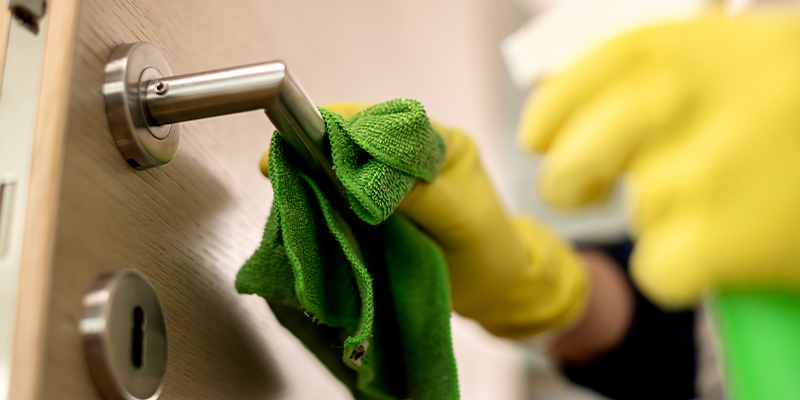
High-touch surface auditing – identifying the surfaces that carry the highest pathogen load (door handles, lift buttons, shared keyboards, tap handles, kitchen surfaces) and ensuring they are cleaned with the frequency and method appropriate to their risk level
Scheduled deep cleaning – beyond the daily routine, addressing the parts of the building that daily cleaning cannot reach
Documented cleaning protocols – clear, site-specific specifications that define what is cleaned, how often, and to what standard
Consumable usage tracking – measuring the cleaning chemicals, equipment, and resources actually being used against what was contracted
On-site supervision and quality audits – regular walkthroughs by trained supervisors who verify that the standard is being maintained, not just assumed
Site-specific cleaning plans – built around the way the space operates, not a generic template applied across every contract
A cleaning provider working to this standard is doing something quite different from a cleaning provider working to “the floors look fine.” And the difference shows up in the building over time – in air quality, in equipment lifespan, in staff sick days, in customer perception, and in the cost of remedial cleaning when something has been quietly neglected for too long.
The Hidden Cost of “Good Enough” Cleaning
Most businesses underestimate what poor cleaning actually costs them, because the cost is distributed across line items that nobody connects back to the cleaning contract.
Consider:
Sick days. Pathogen-heavy environments increase staff absenteeism. The flu season hits harder. Stomach bugs spread further. Productivity drops in ways that show up in HR data, not cleaning data.
Equipment wear. Dust, grit, and biofilm shorten the lifespan of office equipment, HVAC systems, kitchen appliances, and flooring. Replacement happens earlier than it should.
Air quality. Inadequate cleaning of air return vents, carpets, and soft furnishings degrades indoor air quality measurably – affecting concentration, fatigue, and respiratory health.
Reputation. Visible signs of poor cleaning (grimy washrooms, dusty reception areas, sticky kitchens) shape how staff, customers, and visitors perceive the business. The perception of the cleaning is the perception of the business.
Compliance exposure. In regulated sectors – food, healthcare, hospitality, childcare – inadequate cleaning is not just a hygiene issue. It is a compliance issue, with real consequences when it is discovered.
The cumulative cost of these is consistently higher than the marginal savings of a cheaper cleaning contract. But because it is distributed and indirect, it rarely gets traced back to its source.
What Your Building Is Already Telling You
Most buildings give clear signals about the cleaning standard they are actually receiving – if you know where to look.
A few practical indicators worth checking:
Run a finger along the top of a door frame, a skirting board, or the base of a chair leg. Dust accumulation here indicates that scheduled deep cleaning is being skipped.
Check the underside of desks and the back of office equipment. These surfaces tell the truth about routine attention.
Look at the grout in washroom tiling. Stained or discoloured grout indicates surface cleaning without proper sanitisation.
Check air vents and return grilles. Visible dust here affects everyone in the building, every day.
Look at high-touch surfaces during the working day. A clean door handle at 7 a.m. is one thing. A clean door handle at 3 p.m. is the actual measure of the system.
Ask staff. People who work in the space every day know things that walkthrough audits miss.
None of these tests are conclusive on their own. Taken together, they give a reasonably accurate read on whether the building is being cleaned to a measurable standard, or simply maintained in a way that passes a casual glance.
What Should Be in Your Cleaning Contract
Most cleaning contracts are written in a way that protects the provider, not the client. The deliverables are vague. The frequency is generic. The measurement is absent.
A cleaning contract that supports a measurable cleaning standard should include:
- A site-specific cleaning specification, not a generic schedule
- Clearly defined high-touch surface protocols, with frequency and method
- A periodic deep cleaning schedule, with documented outputs
- Provision for regular cleaning audits, with documented findings and corrective actions
- Reporting on consumable usage, incident management, and any deviations from the agreed specification
- Defined escalation procedures for issues identified during cleaning (damage, leaks, hygiene risks, security concerns)
- Clarity on supervision – who is responsible for quality on-site, and how often they are present
If your current contract does not cover these areas in writing, the cleaning standard you are paying for is whatever your provider chooses to deliver – not what you have agreed to receive.
Cleaning as an Operational Discipline
The businesses that consistently maintain high cleaning standards tend to share a few characteristics. They treat cleaning as an operational function rather than a procurement function. They measure it. They review it. They expect their cleaning provider to operate as a partner, not a supplier – bringing expertise, raising issues, and contributing to the broader operational health of the building.
That shift in mindset – from cleaning as a cosmetic service to cleaning as a measurable discipline – is what separates the buildings that consistently perform from the buildings that consistently disappoint.
It is also what protects a business from the slow, invisible accumulation of cost that comes with inadequate cleaning over time.
Red Alert Service Solutions works with businesses across South Africa to deliver cleaning services that are built around the way each site actually operates. That includes site-specific cleaning plans, documented high-touch surface protocols, scheduled deep cleaning, and the reporting and supervision needed to maintain a standard that can be measured rather than assumed.