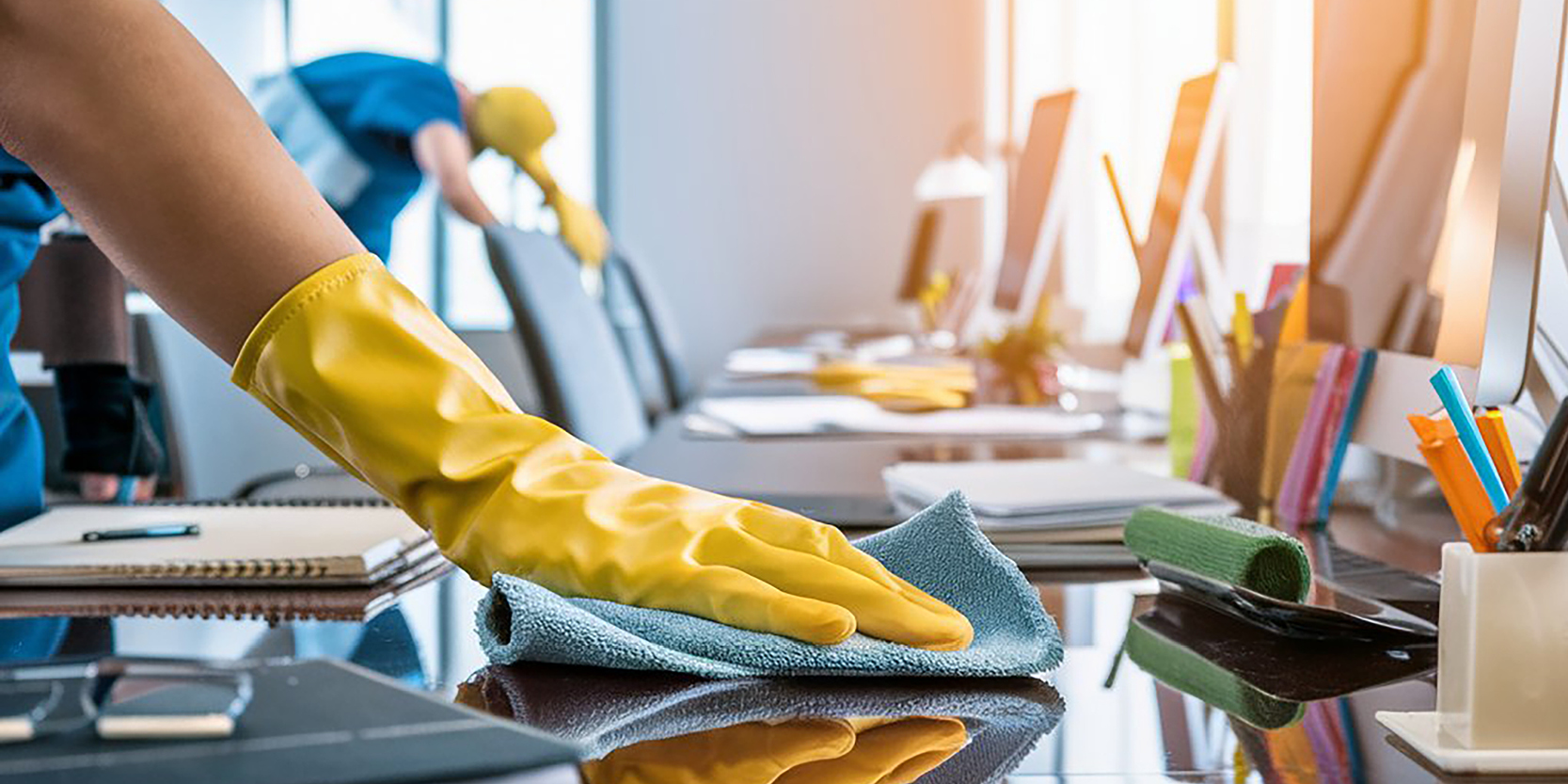
“Anyone can clean.” It’s one of the most common assumptions out there – and one of the most wrong.
Walk onto a professionally cleaned site and what looks simple on the surface is usually the result of training, systems, and knowledge most people never see. Here’s what actually goes into doing this job properly.
Chemical Safety Isn’t Optional
Cleaning chemicals aren’t interchangeable, and mixing the wrong two can be genuinely dangerous – not to mention damaging to surfaces, fabrics, or equipment. Trained cleaning staff know which products to use where, how to store them safely, what PPE each task requires, and how to handle chemicals in line with health and safety regulations. That’s not common knowledge. It’s trained knowledge.
Colour-Coding Exists for a Reason
Ever noticed cleaning cloths or equipment in different colours? That’s not a style choice – it’s an infection-control system. Colour-coding keeps cleaning tools dedicated to specific areas (kitchens, bathrooms, general surfaces) so contamination doesn’t get carried from one space to another. In healthcare, hospitality, and food service environments especially, getting this wrong has real consequences.
Specialised Equipment Takes Real Training
Industrial floor buffers, extraction machines, pressure washers, high-level access equipment – these aren’t things you figure out on day one. Using them safely and effectively, on the right surfaces, at the right settings, takes proper training. Used incorrectly, this equipment can damage flooring, surfaces, or cause injury.
Reading a Space Is a Skill in Itself
Professional cleaners learn to assess a space the way a technician assesses a job – identifying high-touch points, problem areas, and risk zones, rather than just cleaning what’s visibly dirty. That’s the difference between a space that looks clean and one that’s actually been made hygienic.
Documentation and Accountability
In commercial and industrial settings, cleaning isn’t just done – it’s recorded. Checklists, sign-offs, compliance logs. This matters for audits, health inspections, and client assurance, and it’s a discipline that takes training to do consistently and properly.
Why This Matters
When cleaning is treated as low-skill, it gets staffed and managed that way – and standards slip. When it’s recognised for what it actually is, the results show. Properly trained cleaning teams protect health, prevent damage, reduce risk, and maintain standards that casual cleaning simply can’t match.
At Red Alert, our cleaning teams are trained on chemical handling, colour-coding systems, equipment use, and documentation because doing it right takes more than a mop and a willing pair of hands.