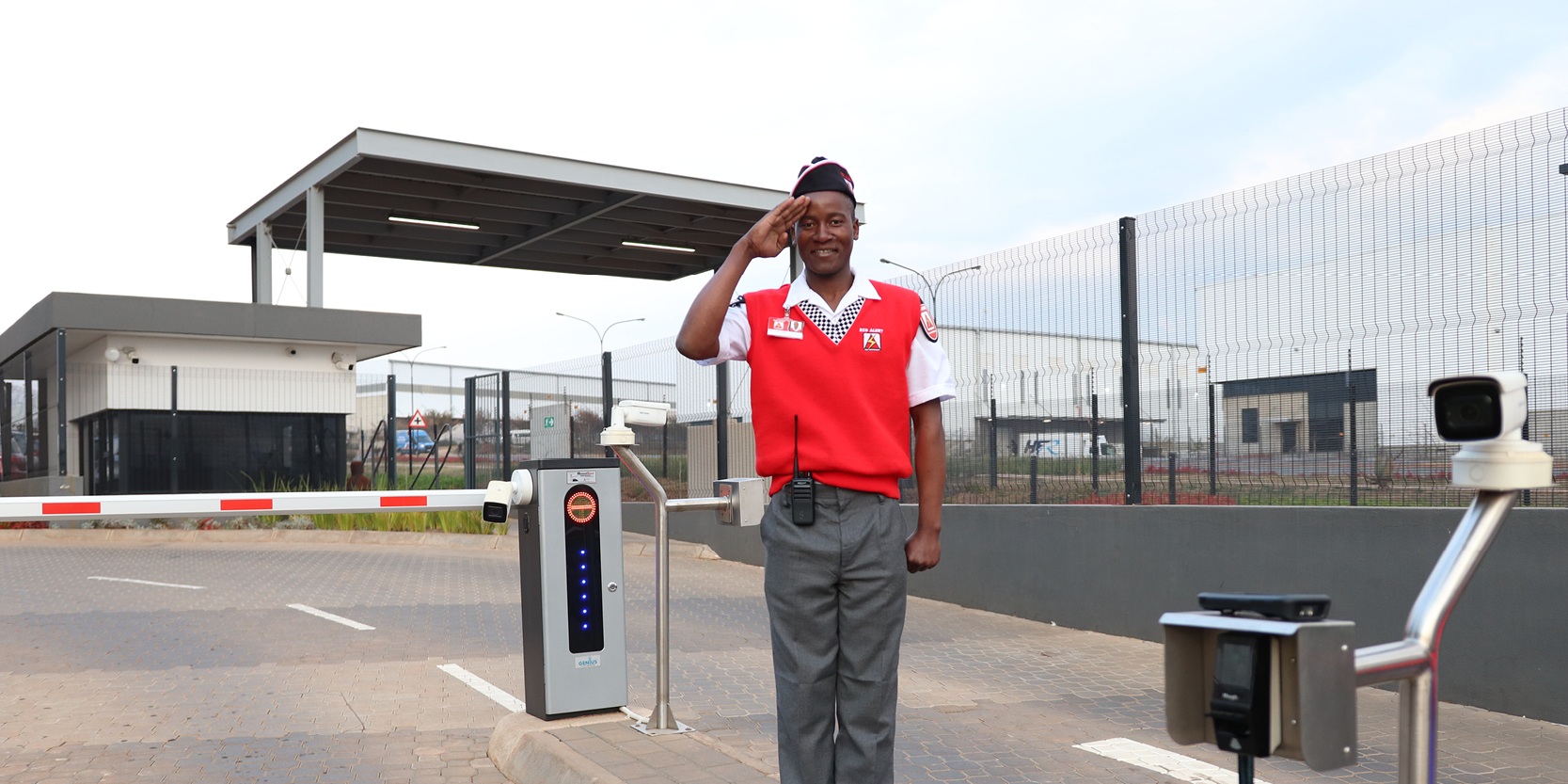
If you’ve ever stopped to count the security guards you pass in a single day – at the mall, outside your office park, patrolling your estate gate – you’ve already got a sense of just how big this industry has become. But the real numbers are still staggering.
According to the Private Security Industry Regulatory Authority (PSIRA), there are more than 637,000 active private security officers in South Africa, with over 2.9 million registered security personnel overall. Compare that to a police force sitting at 184,106 members, and the picture becomes clear: private security guards now outnumber police officers by roughly three to one.
That’s not a niche industry. That’s one of the largest private employment sectors in the country.
A Workforce Bigger Than the Police and Army Combined
It’s a statistic that tends to stop people in their tracks: South Africa’s private security workforce is significantly larger than both the South African Police Service and the South African Defence Force combined. With the SANDF’s active personnel sitting at a fraction of historical levels, private security has quietly become the country’s largest organised protective force – full stop.
This isn’t a sign of a broken system. It’s a sign of an industry that has stepped up to meet real, urgent demand – and built sustainable jobs while doing it.
Where the Growth Is Happening
The numbers tell a growth story too. There are 16,000 active security companies employing over 600,000 security officers nationwide, with most businesses operating in Gauteng (40%), followed by KwaZulu-Natal (18%) and the Western Cape (10%).
That spread matters. Private security isn’t concentrated in one city or one type of client – it’s woven into the daily economic life of the whole country, from industrial parks and CBDs to residential estates and rural facilities.
And the sector keeps evolving. There’s a clear shift toward integrating technology with manned guarding and monitoring, with growing investment in remote monitoring, asset tracking, and tech-enabled response. The guards on the ground today are working alongside smarter systems than ever before – a trend we explored in our last post on how the human element in guarding actually strengthens AI-driven security, not competes with it.
Why This Matters for Job Creation
Here’s the part that doesn’t get talked about enough: private security is one of South Africa’s most significant – and most accessible – job creators.
At a time when unemployment remains one of the country’s biggest economic challenges, an industry employing well over half a million people directly, with millions more registered and trained, is doing real, measurable work to put people into stable employment. It offers a genuine career path too – from frontline guarding roles through to supervisory, technical, and management positions, with SETA-accredited training opening doors for advancement along the way.
For many South Africans, a PSIRA-registered security qualification is a first step into formal employment – and for companies like Red Alert, building that career pathway responsibly is part of what professional guarding should look like.
More Than a Stopgap for Under-Resourced Policing
It would be easy to frame private security purely as a response to policing capacity – and there’s truth in that. But reducing the industry to “filling a gap” undersells what it has actually built: a regulated, professionalised sector with its own standards body (PSIRA), its own compliance framework, and its own growing economic footprint.
Guarding today looks nothing like guarding twenty years ago. It’s trained, monitored, increasingly tech-integrated, and accountable – and it’s an industry that continues to grow because businesses and communities trust what it delivers.
South Africa’s private security industry isn’t just big – it’s foundational. It protects homes, businesses, and infrastructure across the country, employs hundreds of thousands of people, and continues to grow as both a safety solution and an economic force in its own right.
At Red Alert, we see this every day – in the guards who show up, the systems that back them up, and the communities and businesses that rely on both.
Sources: PSIRA Annual Report 2023/24; SAPS Annual Report 2023/24