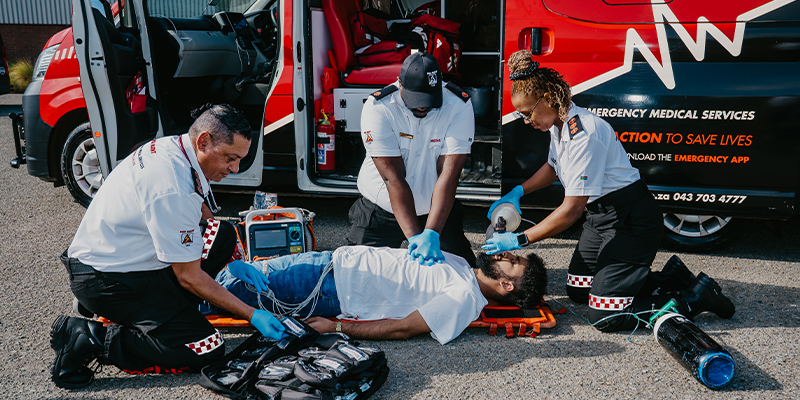
What South Africa’s Safest Businesses Do Differently
Ask most business owners whether they have emergency provisions in place and the answer is usually yes. There’s a first aid kit in the storeroom. Someone on staff has a basic first aid certificate. The local emergency number is pinned to the noticeboard.
That is not an emergency response plan. And in a genuine workplace emergency, the difference between those two things can determine whether someone lives or dies.
South African employers have a legal and moral obligation to protect their people. But obligation aside, the practical reality is that most workplaces are underprepared – not out of negligence, but because the gap between minimum compliance and genuine readiness is rarely visible until it matters most.
What the Law Actually Requires
The Occupational Health and Safety Act places a clear duty on employers to provide and maintain, as far as is reasonably practicable, a working environment that is safe and without risk to the health of employees. This extends beyond physical hazards to include the systems and resources needed to respond when something goes wrong.
Depending on the size and nature of your operation, this may include trained first aiders on site, documented emergency procedures, regular safety talks and drills, and access to emergency medical support. The Act is not prescriptive about every detail – but ignorance of the requirements is not a defence when an incident occurs.
The question worth asking is not whether you meet the minimum. It is whether your current provisions would actually hold up in an emergency.
Why Location Changes Everything
For businesses in major urban centres, public emergency services are never far away. Response times, while not always ideal, are generally manageable. For businesses in smaller towns, industrial areas or more remote locations, that safety net looks very different.
Red Alert EMS operates in East London, Ceres, Komani, Qonce, Mdantsane and Gcuwa – areas where reliable, professional emergency medical response makes a meaningful difference to outcomes. In these regions, having a trusted EMS provider as part of your emergency response structure is not a luxury. It is a practical necessity.
But emergency preparedness doesn’t begin with the ambulance. It begins long before – in the training, the planning and the culture that determines how your team responds in the critical minutes before professional help arrives.
The Role of Online Safety Training
Not every business has access to on-site training providers. And not every team can take a full day away from operations for a safety workshop. This is where online safety talks and first aid training have changed the conversation.
Red Alert EMS offers online first aid training that gives businesses across South Africa access to professional-grade emergency preparedness support – regardless of where they are located. It is worth noting that while the theoretical component of first aid training can be completed online, a face-to-face practical session is still required to complete certification. Our training is practical, focused and delivered by people who understand what real emergency response looks like on the ground.
For HR managers and operations leads, this removes one of the most common barriers to getting training done. There is no travel burden for the theoretical component, no scheduling complexity and no reason to defer it to next quarter.
What a Proper Emergency Response Plan Looks Like
An effective workplace emergency response plan goes beyond a laminated sheet on the wall. It is a living document that your team understands, has practised and can execute under pressure. At a minimum it should cover:
Clear roles and responsibilities. Who takes charge in an emergency? Who calls for help? Who manages the scene until professional support arrives? Every person on your team should know their role before an incident happens.
Trained first responders. Basic, intermediate or advanced first aid training among your staff buys critical time. It does not replace professional EMS – but it can mean the difference between a stable patient and a deteriorating one by the time help arrives.
Documented emergency contacts and protocols. Not just a phone number on a noticeboard, but a clear sequence of actions that removes the need for anyone to think under pressure.
Regular safety talks and drills. Knowledge fades without reinforcement. Regular engagement keeps your team sharp and your plan relevant.
A relationship with a professional EMS provider. Knowing who to call – and having that provider know your site – is not a small thing. Familiarity saves time, and time saves lives.
The Cost of Being Underprepared
Workplace incidents carry financial consequences as well as human ones. Compensation claims, regulatory penalties, reputational damage and operational disruption are all potential outcomes of an incident that was not adequately managed.
More importantly, every workplace emergency involves a person. Someone’s employee. Someone’s parent, partner or child. The cost of genuine preparedness is modest. The cost of not being prepared is immeasurable.
Start With a Conversation
Whether your business is in East London, Ceres, Komani, Qonce, Mdantsane, Gcuwa or anywhere else in South Africa, Red Alert EMS can help you assess your current emergency preparedness and identify where the gaps are.
Our online first aid training and safety talks are an accessible, practical starting point – and our team brings real emergency medical expertise to every engagement.
Don’t wait for an incident to find out whether your provisions are adequate.
📞 087 094 7777