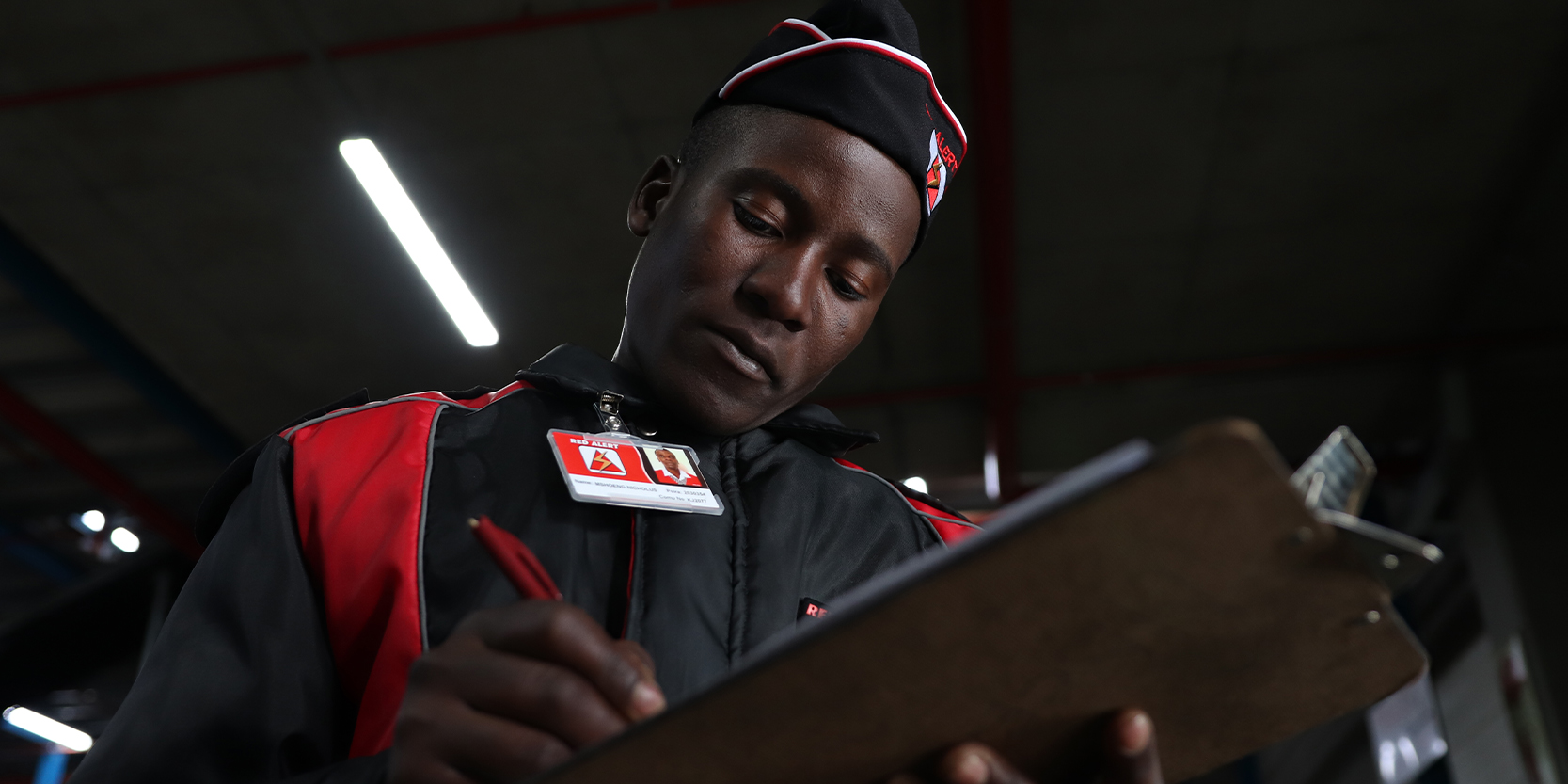
Security is rarely something people think about until it’s missing. When it’s working, it fades into the background – a guard at reception, a locked gate, a response vehicle nobody’s had to call. The moment it’s missing, it’s the only thing anyone can think about.
That makes “how secure is secure enough” a harder question than it sounds. There’s no fixed line where a workplace crosses from unsafe to safe. It’s closer to a feeling – one shaped by visible presence, response speed, and whether people believe help would actually arrive if something went wrong.
What makes people feel safe at work
Feeling secure at work isn’t just the absence of incidents – it’s whether people believe their employer is taking their safety seriously. Research on workplace safety consistently finds a gap between perceived and actual safety: employees often feel their workplace is safe while still reporting near-miss incidents that point to hidden risks. That gap matters, because perception is what shapes behaviour day to day, long before an actual incident does. OHSE
Employees are looking for a few concrete things: visible security presence rather than a policy buried in a handbook, management that’s seen to prioritise safety through decisions and resourcing rather than just saying so, and confidence that reporting a concern will actually lead to a response. Where that confidence is missing, the effect compounds – fear of retaliation or a belief that nothing will change discourages people from raising safety concerns at all, which quietly erodes trust further.
Who feels this most acutely
Some industries carry this weight more visibly than others. Healthcare is a clear example – a South African study of hospital staff found that only roughly one in five healthcare professionals felt hospital authorities were genuinely concerned about their safety, even where staff had otherwise positive views of the security system itself. That’s a telling distinction: good guarding and infrastructure isn’t always enough on its own if staff don’t feel leadership is invested in their protection. nih
Retail environments face a different pressure – public-facing sites with cash handling, high foot traffic, and constant exposure to the public carry a different risk profile to a back-office environment, which is part of why shopping centres, standalone stores, and hospitality venues lean so heavily on visible guarding and rapid response as reassurance, not just deterrence.
More broadly, South Africa’s private security industry has expanded its partnership with government, improving response times and intelligence sharing in major cities – a sign of how central private security has become to filling a gap that public policing alone doesn’t close, particularly for businesses operating in the country’s higher-risk metros. Crimepro
So, how secure is secure enough?
There isn’t a single number or checklist that answers it. It’s the combination of visible presence, fast response, and a workforce that believes their employer has actually thought about their safety – not assumed it. That’s the standard Red Alert works to, site by site, because “secure enough” looks different in a hospital corridor than it does in a shopping centre car park, and treating them the same is usually where the gap between perceived and actual safety starts.